
‘AI Is Keeping Pace with Humans—and in Some Areas, Moving Ahead’
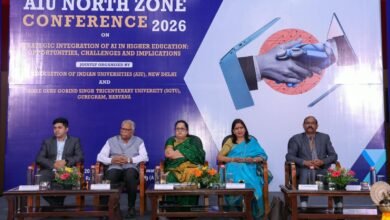
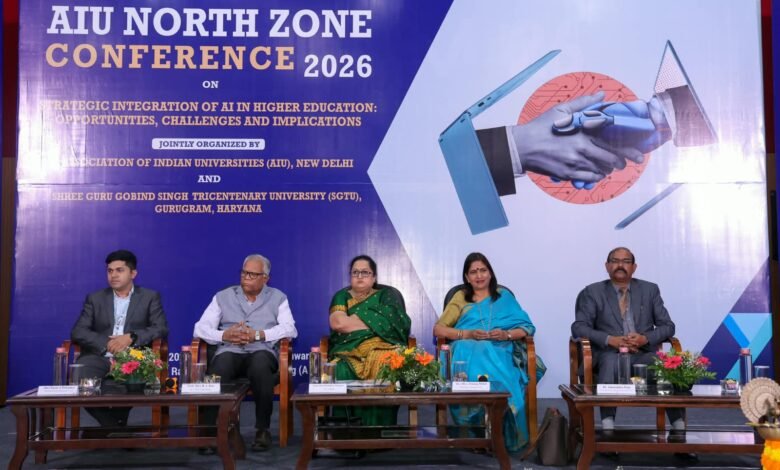
AIU North Zone Conference 2026 held at SGT University


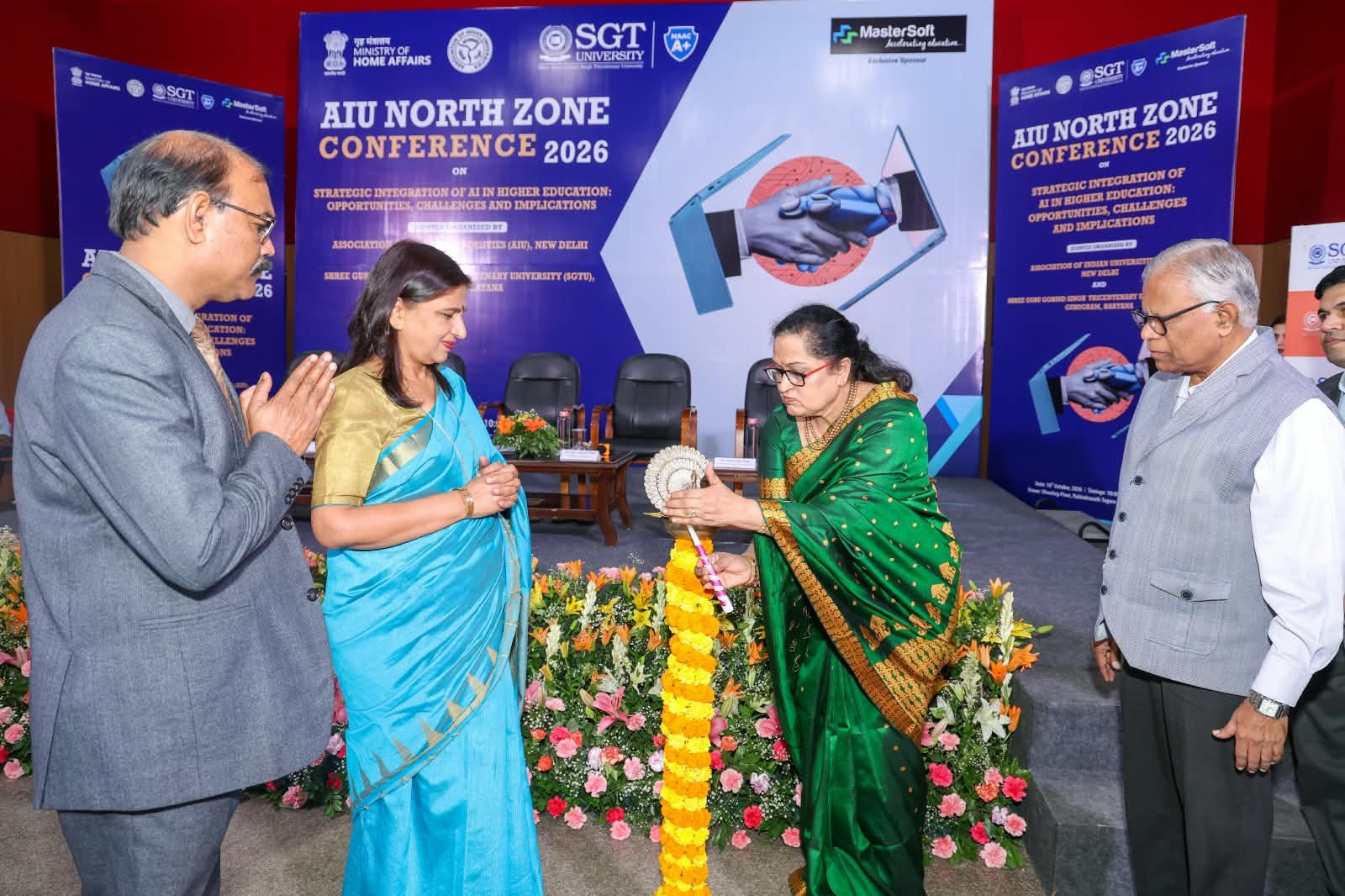
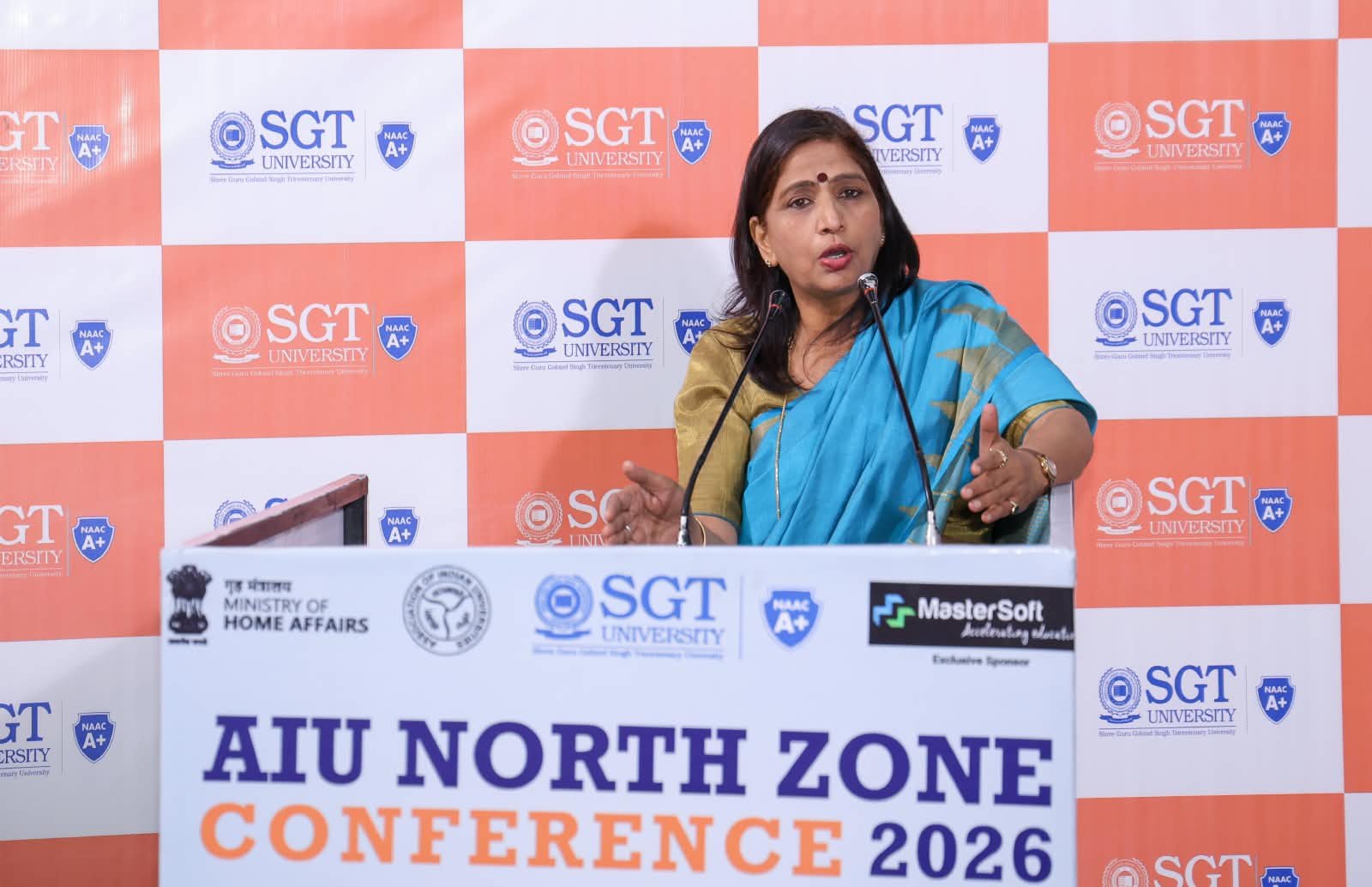
Experts deliberate on the opportunities, challenges, concerns and future implications of Artificial Intelligence in higher education
Gurugram, 17 October : The AIU North Zone Conference 2026, organised by the Association of Indian Universities (AIU) in collaboration with SGT University, witnessed extensive deliberations on the emerging possibilities, pressing concerns and challenges associated with Artificial Intelligence (AI).
Held at the SGT University campus on the theme “Strategic Integration of AI in Higher Education: Opportunities, Challenges and Implications,” the conference brought together academicians, educationists, researchers and experts to examine the growing influence of AI on higher education. Through diverse perspectives and arguments, the speakers broadly agreed that AI has already arrived and that the time for merely opposing it or expressing apprehensions about its presence has passed. The need of the hour is to understand, adopt and use it responsibly.
The discussions revolved around several significant observations: AI is now keeping pace with human intelligence and, in certain areas, moving ahead; it is emerging as a catalyst as well as an interceptor; teachers who fail to keep pace with AI risk being replaced; AI has created a crisis of trust; it cannot replace the human mind; it should be treated as an assistant rather than a master; and its role will become indispensable throughout the academic journey, from admission to graduation. Speakers also expressed concern that AI is gradually diminishing human interaction and dialogue.
The conference commenced with the traditional lighting of the lamp, followed by the university students’ song, “Gyan Ki Halchal.”
Welcoming the participants, SGT University Vice-Chancellor Prof. (Dr.) B. J. Rao observed that AI had emerged as a new entity in the world, operating alongside human beings and, in some areas, even moving ahead of them. He noted that AI was also increasingly serving as a guide in higher education.
AI has become part of everyday life: Prof. Shashikala Wanjari
Chief Guest Prof. (Dr.) Shashikala Wanjari, Vice-Chancellor of the National Institute of Educational Planning and Administration (NIEPA), said that AI had become an essential part of day-to-day transactions. Referring to the concept of “Soul to System,” she explained AI in a broader context and highlighted its far-reaching implications.
She observed that AI had, to a considerable extent, diminished human dialogue. Those with limited knowledge of AI face a significant challenge in the emerging environment, she said. Highlighting the crisis of trust associated with AI, she cautioned that even a minor error in its use could lead to serious consequences. She emphasised the need to transform the adverse implications of AI into positive opportunities through informed and responsible adoption.
AI is an assistant, not a master: Dr. Pankaj Mittal
Dr. Pankaj Mittal, Secretary General of the Association of Indian Universities (AIU), spoke about the organisation’s extensive reach, noting that more than 1,200 universities are associated with it.



Addressing concerns surrounding AI, she urged educators not to fear the technology but to focus on building AI-enabled universities. “AI is not a master; it is an assistant,” she emphasised, adding that teachers must engage with and adapt to AI, or risk being replaced. She also noted that AI is helping improve students’ understanding of academic concepts and appreciated SGT University’s initiative in establishing the Ramanujan Centre.
AI marks the beginning of a new technological era
Paras A. Palsatkar, Academic Consultant at Mastersoft ERP Solution Pvt. Ltd., Nagpur, began his address by tracing the transition from manual to automated methods. Referring to Enterprise Resource Planning (ERP), Learning Management Systems (LMS), attendance dashboards and other technological applications, he highlighted the challenges associated with AI adoption. He observed that students had become increasingly dependent on AI and cited relevant statistics to underline the growing trend.
Prof. (Dr.) Sandeep Sancheti, Vice-President of Elsevier India, reflected on technological developments over the past century, referring to machines and hydraulic equipment. Drawing parallels with historical challenges such as the plague and the COVID-19 pandemic, he described AI as the “new electricity” of the present century, highlighting its transformative potential.
Dr. Amarendra Pani, Joint Director and Head of the Research Division at the Association of Indian Universities, also addressed the gathering.
Three technical sessions explore AI’s evolving role
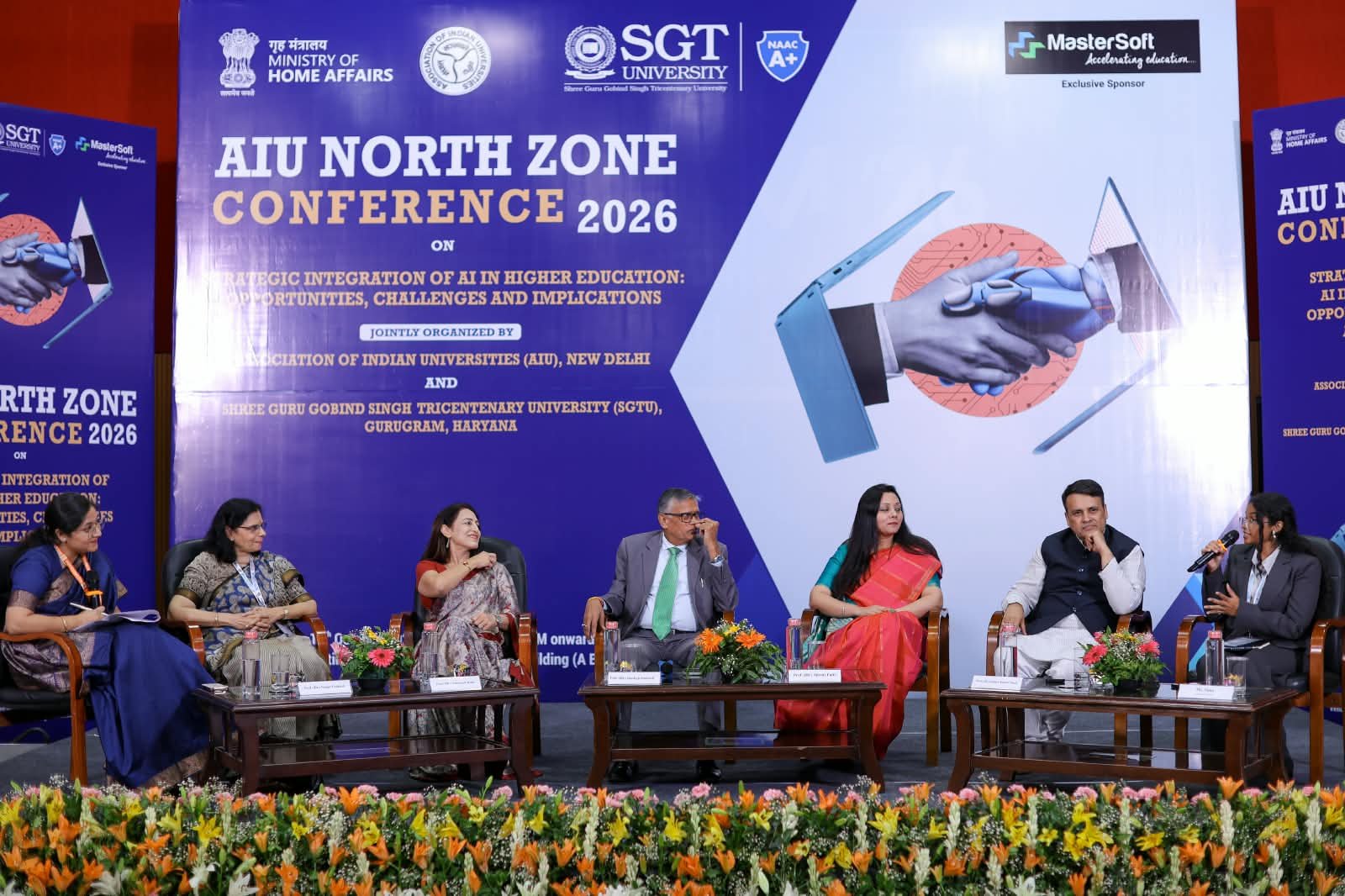
The conference featured three technical sessions that examined different dimensions of AI, including its integration into higher education, its contribution to research and institutional transformation, and the importance of responsible AI, industry-academia collaboration and governance.
The first technical session was moderated by Dr. Aastha Chaudhary, Director, CEAPS, SGT University. The panel included Prof. (Dr.) Shruti Patil, Director of the Symbiosis Artificial Intelligence Institute; Prof. (Dr.) Rajiv Kumar Singh, Dean and Professor, School of Engineering, Shiv Nadar University; Prof. (Dr.) Amarjeet Kaur, Dean of Academic Affairs, Gurugram University; and student panel member Ms. Sana Ahmed from SBSC.
The second technical session focused on “AI for Research Innovation and Institutional Transformation.” It was moderated by Dr. Rajiv Gulati, Advisor, Research Development and Innovation, SGT University. The panel comprised Prof. (Dr.) Sandeep Sancheti, Vice-President, Elsevier India; Prof. (Dr.) Nupur Prakash, Vice-Chancellor, The NorthCap University; Prof. (Dr.) Manav Bhatnagar, Head and Programme Director, Bharti School of Telecom Technology and Management, IIT Delhi; and Prof. (Dr.) Shailesh Kumar, Scientist-IV, BRIC-NIPGR, Ministry of Science and Technology, Government of India.
The third technical session deliberated on “Responsible AI in a Dynamic Context: Industry-Academia Collaboration and Governance.” The panel featured Prof. (Dr.) V. R. Raghuveer, Vice-Chancellor, SRM University; Prof. (Dr.) Mamta Arora, Professor, Department of Computer Science and Technology, MRU, and Google Certified Innovator and Trainer; and student panellist Ms. Surati Chaturvedi from SHSL. Dr. Chand Saini, Professor and Associate Dean, SGT Global Business School, SGT University, moderated the session.
The conference concluded with a vote of thanks by Dr. Amarendra Pani, Joint Director and Head of the Research Division, Association of Indian Universities.