
Organic sources can help farmers overcome chemical fertiliser crisis: Dr. Shakti Om Pathak
Paddy sowing season around the corner, farmers advised not to overlook vermicompost and eell-decomposed farmyard manure

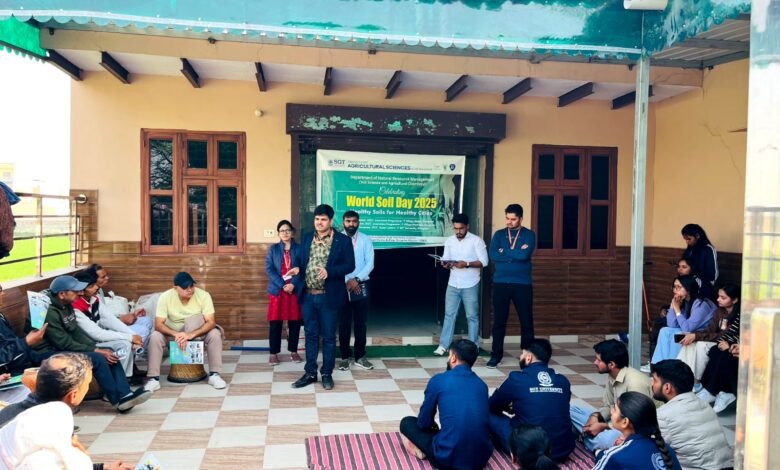


Gurugram: Renowned agricultural scientist Dr. Shakti Om Pathak has said that the geopolitical circumstances prevailing across the world, particularly the growing tensions in West Asia and developments such as the Iran–US conflict, are adversely affecting the energy and fertiliser industries. The country is currently facing a serious shortage of chemical fertilisers.
Dr. Shakti Om Pathak, Assistant Professor at SGT University, Gurugram, has advised farmers to reduce their dependence on chemical fertilisers and make maximum use of organic and locally available resources under the prevailing circumstances.
Dr. Pathak is also the In-charge of the Soil Testing Laboratory at SGT University. He said that paddy is one of India’s major crops and requires adequate quantities of nitrogen, phosphorus and potassium. If organic sources are used scientifically, the requirement for chemical fertilisers can be reduced by 25–50 per cent, while soil fertility and productivity can also be maintained over the long term.
1. Compost
Compost is an organic manure prepared through the controlled decomposition of organic residues obtained from farms and households. It generally contains about 0.5–1.5 per cent nitrogen, 0.4–0.8 per cent phosphorus and 0.5–1.2 per cent potash.
Incorporating 5–10 tonnes of well-decomposed compost per hectare into the soil 15–20 days before paddy transplantation improves soil structure, enhances water-holding capacity and ensures the gradual availability of nutrients to plants. Compost also increases the population of beneficial microorganisms in the soil, thereby accelerating nutrient mineralisation.
2. Vermicompost
Vermicompost is a high-quality organic manure prepared with the help of earthworms. It generally contains higher levels of nutrients than conventional compost, including 1.5–2.0 per cent nitrogen, 1.0–1.5 per cent phosphorus and 1.2–2.0 per cent potash.
The application of 2–3 tonnes of vermicompost per hectare in paddy cultivation promotes plant growth, improves root development and helps reduce the requirement for chemical fertilisers. Beneficial microorganisms present in vermicompost can also contribute to better plant health and disease resistance.
3. Green Manure
Green manure is considered one of the most effective organic alternatives for supplementing chemical fertilisers. Crops such as dhaincha, sunhemp, moong and cowpea can be grown as green manure and incorporated into the soil after about 45–50 days.


Green manure can add approximately 40–60 kg of nitrogen per hectare to the soil, thereby meeting a significant portion of the nitrogen requirement of paddy. It also increases organic matter, enhances microbial activity and improves the availability of phosphorus and other nutrients.
4. Use of Crop Residues
According to Dr. Shakti Om Pathak, instead of burning paddy and wheat residues, farmers should incorporate them into the soil and allow them to decompose. The use of biological decomposers along with crop residues can accelerate their decomposition.
This practice increases organic matter, improves soil structure and, over the long term, helps reduce dependence on chemical fertilisers.
5. Well-Decomposed Farmyard Manure
Dr. Pathak said that well-decomposed farmyard manure is one of the oldest and most reliable organic manures used in Indian agriculture. It contains nitrogen, phosphorus and potassium, along with several micronutrients.
Applying 10–15 tonnes of well-decomposed farmyard manure per hectare in paddy cultivation can significantly improve the physical, chemical and biological quality of the soil. It also enhances the efficiency with which plants utilise fertilisers.
6. Biofertilisers
Biofertilisers are beneficial microorganisms that help make nutrients available to plants. The following biofertilisers are particularly useful in paddy cultivation:
Azospirillum
Azotobacter
Blue-green algae
Azolla
Phosphate-solubilising bacteria
Their use can help save approximately 20–30 kg of nitrogen per hectare and also improve the availability of phosphorus to plants.
7. Integrated Nutrient Management
Under the present circumstances, relying exclusively on either organic or chemical fertilisers is not advisable. The most effective approach is Integrated Nutrient Management (INM).
Farmers can achieve good results by adopting a combination of:
50–75% of the recommended chemical fertiliser dose
5–10 tonnes of compost or farmyard manure
2–3 tonnes of vermicompost, depending on availability
Green manure
Biofertilisers
Such an integrated system can help maintain paddy productivity while reducing the consumption of chemical fertilisers.
Key Advice for Paddy Farmers
Dr. Shakti Om Pathak also offered several important recommendations for paddy farmers:
Use fertilisers only on the basis of soil-test recommendations.
Make maximum use of organic resources available on the farm.
Adopt green manuring before paddy transplantation.
Use only well-decomposed farmyard manure.
Regularly incorporate vermicompost and biofertilisers into the nutrient-management programme.
Instead of burning crop residues, incorporate them into the soil.
Adopt balanced nutrient management to reduce cultivation costs and maintain long-term soil fertility.